Amid the growing seriousness of school violence and the erosion of respect for teachers—an urgent social problem—an upcoming drama has emerged to relieve public frustration and is drawing attention.
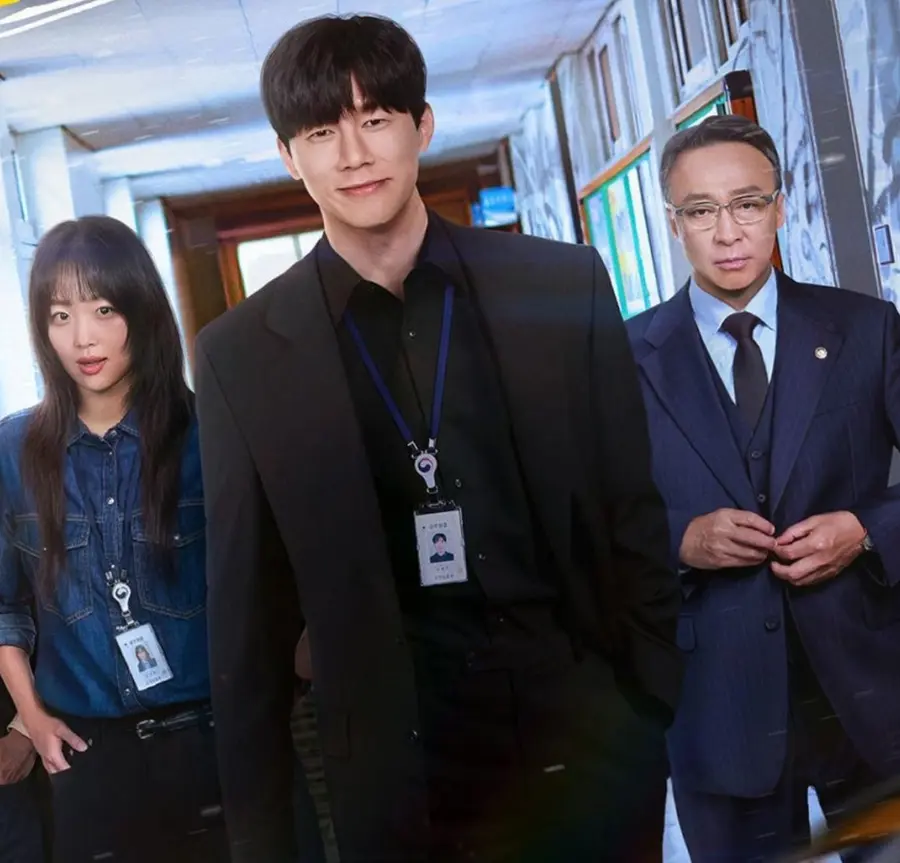
Netflix Original series “Reply to Your Classmates,” released on the 5th, unfolds against the backdrop of the Office for Teacher Rights Protection, a fictional organization under the Ministry of Education. Starring Lee Seong-min (as Choi Kang-seok) and Kim Moo-yeol (as Na Hwa-jin), the show delivers intense vicarious satisfaction to viewers as it punishes delinquent students, abusive parents, and unfit teachers through what it portrays as extra-legal means.
Based on the popular Naver webtoon of the same name, the series is directed by Hong Jong-chan, director of Netflix’s “Juvenile Justice,” and generated major expectations even during the production stage. In particular, commentators say the overwhelming acting chemistry between Lee Seong-min and Kim Moo-yeol heightens viewer immersion in the story.
An eye for an eye, a tooth for a tooth… Catharsis from extra-legal authority
In the drama, Na Hwa-jin, a former special forces officer, takes down problematic figures in education settings without mercy, armed with overwhelming force and power. The Office for Teacher Rights Protection is depicted as a sanctuary not subject to any legal constraints, justified as being for educational purposes.
Na Hwa-jin’s way of punishing follows a strict cause-and-effect logic. When it forces parents who pressure their children with harsh college entrance exams to experience the same pain, viewers get a thrilling sense of satisfaction as the show returns, in full, the evil deeds committed by perpetrators. The targets of punishment are not confined to students; the series also delivers pointed criticism that extends to teachers, parents, and even a dysfunctional school violence committee, attacking the “sanctuary” on all fronts.
A debate over violence and human rights violations that erupts beneath genre thrill
But as episodes keep piling up, the catharsis is being dampened and concerns are growing. With a provocative pattern that repeatedly punishes violence with violence, questions are being raised about whether such extreme methods can serve as a real alternative to education.
It also appears that controversy that surfaced when the original webtoon was being serialized has not been fully resolved. The production team tried to adapt sensitive elements such as racial discrimination, but it left intact the overall narrative structure that justifies physical violence. In fact, before the release, some teachers’ groups reportedly pointed to depictions of corporal punishment and human-rights violations and called for the drama’s production to be halted.
At a production news conference, director Hong Jong-chan explained, “I focused on the appeal of the fantasy setup itself—namely, the Office for Teacher Rights Protection.” Still, he left a limitation: the drama’s direction that overly sanctifies the organization and tries to solve structural problems only through an individual’s force did not lead to deeper reflection.
Breaks into global No. 5… a box-office surge and weighty tasks left behind
Even amid these mixed evaluations, the early momentum of “Reply to Your Classmates” at the box office is fierce. According to FlixPatrol, within just one day of release it rose to No. 1 in the Korea Netflix TV show category and to No. 5 in the global TV show category, proving global interest.
With “Reply to Your Classmates” delivering both genre entertainment and a sharp sense of social issues, it remains to be seen whether it can leave a meaningful topic for South Korea’s education circles beyond being a simple revenge-for-justice drama. It is time to revisit the weight of the questions the series puts on the table.